A Blupete Biography Page

Robert Southey
(1774-1843):
"The Patriot Bard."
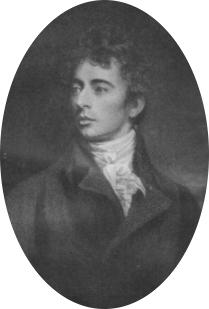
Portrait of Southey
[Text] [See Further Portrait]


Thomas Southey, a Bristol linendraper, married Margaret Hill in 1772. Their son, Robert, was born to them at Bristol on August 12th, 1774, as the second and eldest surviving child.
1 In his early years Robert was mostly brought up by his mother's half sister, living in Bath, Miss Elizabeth Tyler. Bath was a centre to which the rich and influential regularly retired and thus it was a cultural centre. Miss Tyler was to bring her young charge to cultural events including live theatre.

At the age of fourteen, Robert was sent, at his uncle's expense (his uncle was Rev. Herbert Hill who was the Chaplain to the "British Factory" at Lisbon, Portugal) to Westminster School. During his last year at school, Southey entered a period of acute adolescent rebellion, finally being expelled for a school-magazine essay condemning flogging. As a result of this expulsion Southey was refused entrance at Christ Church, Oxford; however, he was accepted at Balliol where he matriculated in November 1792. Southey's stay at Oxford was not so profitable for him, as he was later to declare, "All I learnt was a little swimming ... and a little boating."2

At Oxford, in June of 1794, Southey was to meet Coleridge who was then visiting from Cambridge. The two hit it off; and, together with some of their fellow political dreamers, were soon making plans for a communistic settlement in America to be independent of any government except that of the settlement itself, a pantisocracy.

"Their wants would be simple and natural; their toil need not be such as the slaves of luxury endure; where possessions were held in common, each would work for all; in their cottages the best books would have a place; literature and science, bathed anew in the invigorating stream of life and nature, could not but rise reanimated and purified. Each young man should take to himself a mild and lovely woman for his wife; it would be her part to prepare their innocent food, and tend their hardy and beautiful race."3
These lovely ideas were to become unraveled about as quick as they were knitted up. Of all the group (Coleridge, et al.) Southey was the first -- after first suggesting as an alternative to America, that the community might be set up in Wales -- to proclaim that pantisocracy, unworkable. The fundamental flaw, of course, whether they saw it this way or not, was that in all such schemes where everyone was expected to throw all they have in to the communal pot couldn't possibly work given the nature of man; besides, even to get such a community set up would take a fair bit of money, money which none of these young dreamers had. However, it does seem that certain of these young pantisocrats had lined up three "mild and lovely women" for their wives: the three Fricker sisters.

These developments were not to much impress Robert Southey's family. His uncle, Rev. Hill, who was very much interested in shaping things up for young Southey's future thought Robert should go to the ministry; or, if not that, then he should read for the bar. Hill didn't push too hard and suggested that Robert should take a little time to think about things and suggested he should go to Portugal and spend some time with him, Uncle Hill, at Lisbon. Southey agreed and gave up his ideas of pantisocracy; though he was not to give up his idea of marrying Edith Fricker (1774-1837). Aunt Tyler, incidently, was particularly disturbed over Robert's plans to marry Edith Fricker, whom she thought was but a common girl.

So it was, in 1795, that Southey was off to spend time at Lisbon. But first there was a commitment that he felt bound to honour before he left. On the 14th of November, 1795, in the parish of the Fricker family, St Mary Redcliff, Bristol, Robert Southey secretly married his love, Edith Fricker. (Better than a month earlier, I should note, in the same church, Coleridge married Sarah Fricker. At Coleridge's marriage, Robert Southey was not present as the pair were no longer on speaking terms. Coleridge, it seems, was upset with Southey because Southey had cast aside the ideas of pantisocracy.4 I might add, too, I suppose, having put the pressure on Coleridge to marry, Southey thought it would not do to run off to Portugal without marrying Edith Fricker.) Right after the marriage ceremony, seemingly at the church door, the newly married couple said their goodbyes to one another. Edith was to go and be with the family of a friend while Southey went off to Portugal.5

In September in 1796, after a six month absence, Southey returned to England and to his new wife. He and Edith were to soon set up housekeeping in the Bristol area. In that year there was to be a partial reconciliation with Coleridge particularly with the birth, on September 19th to Sarah Coleridge, the first child, a son, Hartley. Sorrow too was to come that year when his brother-in-law, a young budding poet like Coleridge and Southey, and their close friend, was to suddenly die from a fever leaving behind a young widow (one of the Fricker sisters) and a young child. During the next few years Southey did turn to the study of law, but the law, he was to realize, was not for him. In 1797, a well heeled gentleman (C.W.W.Wynn) was to give Southey a yearly pension of £160, such a gift enabled Southey to devote time to writing and to traveling. In 1800, both Southey and Sara traveled to Portugal to spend time with Rev. Hill. The Southeys were to return to England in June of 1801.

In September of 1803, the Southeys moved to the Lake District, Keswick. (See map.) It would certainly seem that they moved there at the invitation of Mrs. Southey's sister, Sara. As we have seen, Sara had married Coleridge. By 1803, Sara was in need of help. Coleridge was addicted to opium and was proving to be a failure both as a husband and a father. Further, Edith Southey was in need of some consoling, as she had lost her first born but a month before and it must have been thought that a change of scenery would help.6 The Coleridges had moved into this large home at Keswick known as Greta Hall, and had been living there for about three years. Greta Hall was certainly big enough for both families,7 indeed, Greta Hall was big enough for three families: the Coleridges, the Southeys and the Lowells; most of the members of whom were to live together there at Greta Hall for a number of years. As we have seen, the three young friends (Southey, Coleridge and Lowell) had married three of the Fricker sisters. Coleridge was never to spend any great amounts of time there, indeed, in time he was to take up a permanent residence in London; and Lowell, as we have seen, died in 1795. Thus it was that the three sisters and their children were to live at Greta Hall with Southey as the male head of this collective.

De Quincey in his Recollections was to describe Greta Hall and the arrangements, therein. "The house itself -- Greta Hall -- stood upon a little eminence ... overhanging the river Greta. There was nothing remarkable in its internal arrangements: in all respects, it was a very plain, unadorned family dwelling; large enough, by a little contrivance, to accommodate two, or, in some sense, three families, viz., Mr. Southey and his family; Coleridge and his; together with Mrs. Lovell [Lowell], who, when her son was with her, might be said to compose a third." De Quincey then goes on to make reference to the fact that all of the adult women at Greta Hill were sisters; and how, given that they all had children living under the same roof, that among the many amusing jests of Southey's there was the one where he called the hill on which Greta Hall was placed, the aunt hill. "The house had, therefore been divided (not by absolute partition into two distinct apartments, but by an amicable distribution of rooms) between the two families of Coleridge and Southey." The two families might live apart during the day but would meet together at dinner.8

By comparing it to that of Wordsworth's, de Quincey was to write of Southey's library at Greta Hall:

"... the two or three hundred volumes of Wordsworth occupied a little, homely bookcase, fixed into one of two shallow recesses formed on each side of the fireplace by the projection of the chimney in the little sittingroom up stairs. ... I believe Wordsworth rarely resorted to his books ... On the other hand, Southey's collection occupied a separate room, the largest, and every way the most agreeable, in the house; and this room styled, and not ostentatiously (for it really merited that name), the Library. ... The books were chiefly English, Spanish, and Portuguese; well selected, being the great cardinal classics of the three literatures."9
Southey, generally, was a very organized and industrious researcher and writer,10 with, due to the generosity of a government pension, the leisure to fully pursue his literary interests. Augustine Birrell was to comment on Southey's industry and devotion:
"He [Southey] wrote poetry (as if anybody could) before breakfast; he read during breakfast; he wrote history until dinner; he corrected proofsheets between dinner and tea; he wrote an essay for the Quarterly afterwards, and after supper, by way of relaxation, composed the Doctor, a lengthy and elaborate jest. Now, what can anyone think of such a life, except how clearly it shows that the habits best fitted for communicating information, formed with the best care and daily regulated by the best motives, are exactly the habits which are likely to afford a man the least information to communicate? Southey had no events, no experiences. His wife kept house and allowed him pocket-money ..."11
De Quincey, who lived as a neighbour to both of them, compared Wordsworth and Southey in respect to their life styles:
"Wordsworth lived in the open air: Southey in his library, which Coleridge used to call his wife. Southey had particularly elegant habits (Wordsworth called them finical) in the use of books. Wordsworth, on the other hand, was so negligent, and so self-indulgent in the same case, that, as Southey laughingly expressed it to me some years afterwards, 'to introduce Wordsworth into one's library, is like letting a bear into a tulip garden.'"12
Overall, especially compared to the other romantics such as Coleridge and Lord Byron, Southey was a steady man, not given to extremes of behaviour; he was pretty flat, and, as Hazlitt was to observe, not "a boon companion." The diarist, Henry Crabb Robinson, however, was charmed by Southey's person and manners. I quote Edith Morley who wrote Robinson's biography:
"Crabb Robinson was on cordial personal terms with Southey from the time of their first meeting at Dr. Aikin's house in March 1808, when he was 'charmed by his person and manners.' They did not agree on politics, and Crabb Robinson 'deemed him... an honest' alarmist; they seldom agreed about poetry, except in so far as both admired Wordsworth and Coleridge. But Crabb Robinson and Southey had much in common in their love of travel and their love of letters, and when, at Godwin's house in 1817, in Crabb Robinson's presence, Shelley 'was very abusive towards the laureate,' saying he had 'sold himself to the court,' the diarist is content to state that 'the friends of Southey are under no difficulty in defending him.' It is, by the way, somewhat surprising to find that Crabb Robinson noted in Shelley 'a resemblance to Southey, particularly in his voice.' This seems to have been the only occasion when the two men met, and Crabb Robinson says that Shelley made 'a pleasing impression, which was not altogether destroyed by his conversation, though he is vehement, and arrogant, and intolerant.'"13
Shelley was abusive of Southey, because Shelley, never did give up on the ideas on which young revolutionaries had fed as the 18th century closed. Ideas as were reflected in the French Constitution of 1791; a theory of liberty, the "Golden Rule of Liberty": Men are born free and equal in rights, ... Liberty, ... consists in being permitted to do anything which does not injure other people. ... The exercise of the natural rights of each man has not limits except those which guarantee to the other members of society the enjoyment of the same rights."(Articles 1 & 3.) These young men, not only in France but in England as well -- and, as we have seen included Southey in his early years -- greeted the French revolutionaries as the saviours of liberty. It, the French Revolution, did indeed, lead directly to the collapse of absolute monarchy and its attending aristocratic orders. In its wake there followed: blood, death and misery. The events that unfolded in France shocked many people such that they were to change their views: Southey and Wordsworth are examples of such men. So, too, it is to be remembered, that the events in France were to turn into international war; to side with the French was to be on the side against England. Edmund Burke summed the matter up:
"Whatever were the first motives to the war among politicians, they saw that in its spirit, and for its objects, it was a civil war; and as such they pursued it. It is a war between the partisans of the ancient civil, moral and political order of Europe against a sect of fanatical and ambitious atheists which means to change them all. It is not France extending a foreign empire over other nations: it is a sect aiming at universal empire, and beginning with the conquest of France."14
As for Southey: well, he progressed with his thoughts and was to come to realize that when men are forced to change the result is blood and misery; best, he concluded in time, and after some soul searching -- to let things be, that things will unfold naturally as they ought to unfold. William Hazlitt wrote of Southey's earlier revolutionary thoughts and his eventual conversion to toryism:
"... the light of the French Revolution beamed into his soul ... while he had this hope, this faith in man left, he cherished it with child-like simplicity, he clung to it with the fondness of a lover. He was an enthusiast, a fanatic, a leveler; he stuck at nothing that he thought would banish all pain and misery from the world; in his impatience of the smallest error or injustice, he would have sacrificed himself and the existing generation (a holocaust) to his devotion to the right cause. But when he once believed after many staggering doubts and painful struggles, that this was no longer possible, when his chimeras and golden dreams of human perfectibility vanished from him, he turned suddenly round, and maintained that 'whatever is, is right.'"15
To Hazlitt, Southey's "inquires are partial and hasty, his conclusions raw and unconcocted..." He wooed Liberty as a youthful lover, but it was perhaps more a mistress than a bride; and he has since wedded with an elderly and not very reputable lady, called Legitimacy."
"He was born an age too late. Had he lived a century or two ago, he would have been a happy as well as blameless character. But the distraction of the time has unsettled him, and the multiplicity of his pretensions have jostled with each other. No man in our day (at least no man of genius) has led so uniformly and entirely the life of a scholar from boyhood to the present hour, devoting himself to learning with the enthusiasm of an early love, with the severity and constancy of a religious vow; and well would it have been for him if he had confined himself to this, and not undertaken to pull down or to patch up the State!'"16
Southey's earlier works, as he was to observe, were written "under the influence of opinions which I have long since outgrown, and repeatedly disclaimed, but for which I have never felt either shame or contrition. They were taken up conscientiously in early youth, they were acted upon in disregard of all worldly considerations, and they were left behind in the same strait-forward course, as I advanced in years."17 Hazlitt was of the view that Southey, if he ever had them, sold out his principles: "he quitted his principles when he saw a good opportunity: in taking up the cause of the Allies, his principles and his interest became united and thenceforth indissoluble."18

By age 38, Southey had quite given up all of the revolutionary notions that he had possessed as a young man. By then, in 1812, he was "a state pensioner and a champion of the party of order in the Quarterly Review..."19 What Southey, and Wordsworth too, had turned into were supporters of British society, and, certainly it is plain, that British society had become supporters of Southey and Wordsworth. Others poets, Byron for one (and he could well afford to be independent in thought) was of the view that Southey and his ilk were but "dull hirelings," "venomous apostates" and "cold blooded assassins of freedom."20

Any conclusion about Southey's character, as was held by Byron, must be tempered by the fact that Robert Southey was a popular person and had many friends. He was to be admired because of his devotion to his work, his family (much extended) and his country; and, maybe just simply, as Hazlitt was to write, because Southey was an "industrious and calligraphic man."

"The variety and piquancy of his writings form a striking contrast to the mode in which they are produced. He rises early, and writes or reads till bedtime ... Study serves him for business, exercise, recreation. He passes from verse to prose, from history to poetry, from reading to writing, by a stop-watch. He writes a fair hand without blots, sitting upright in his chair, leaves off when he comes to the bottom of the page, and changes the subject for another, as opposite as the Antipodes. His mind is after all rather the recipient and transmitter of knowledge, than the originator of it. He has hardly grasp of thought enough to arrive at any great leading truth. His passions do not amount to more than irritability. With some gall in his pen and coldness in his manner, he has a great deal of kindness in his heart. Rash in his opinions, he is steady in his attachments, and is a man, in many particulars admirable, in all respectable -- his political inconsistency alone excepted!"21
It would not appear that Southey had too many disappointments in life. He was certainly deeply affected by the loss of his ten year old son in 1816. Another blow was when, after being married to her for 39 years, in 1837, Edith Southey was to die. Her loss, however, was to come on in stages, the major one being in 1830 when Edith started showing signs of insanity. In the fall of 1834, Southey committed her to an asylum at York. Edith did recover sufficiently so that she came back home by the spring of 1835, so to spend a little more time with her family before her death. Surprisingly -- though, maybe not -- his health having quickly deteriorated after the death of Edith, Southey was to remarry. This was to happen in 1839, when he exchanged vows with Caroline Bowles.22 Southey had but four years to live with Caroline before his death; and, it would appear, she became more of keeper of Southey than anything else. His mental state slipped just shortly after his marriage to Caroline and he became steadily worse; until, in 1843, he was to die. Robert Southey was to be buried in the Churchyard of Crossthwaite near Keswick.

_______________________________

One of the biographies in a book

NOW AVAILABLE

The English Romantics


(For More)(Index In .pdf)
_______________________________
[TOP]
Notes:

1 The Southeys were to have nine children, five of whom died young leaving five boys: Robert (the subject of this biographical sketch), Thomas (b.1777), Henry Herbert (b.1783-1865) and Edward.

2 Wordsworth didn't think that Southey had quite the right personality to get much out of his university experience; he lacked "the congregating temper that pervades our unripe years." (As quoted by Edward Dowden in his biography on Southey (New York: Harper, nd) at p. 29.)

3 Ibid., p. 35.

4 A Bondage of Opium (New York: Stein & Day, 1974) p. 165. As the passing times were to show, Coleridge was less upset with Southey because of the aborted ideas of their youth, but continued to bear a grudge because (so Coleridge thought) Southey had forced Coleridge to marry a girl that he did not love.

5 Dowden's biography, op. cit., p. 43; Molly Lefebure's A Bondage of Opium, op. cit., p. 169; and, Maurice H. Fitzgerald's biographical table, xxi-xxviii, Poems of Robert Southey (Oxford University Press, 1909).

6 In September of 1802, the Southeys' first child was born, Margaret Edith; she was to die in August of the following year. There were to be others: Edith May (b.1804), Herbert (b.1806-1816), Emma (1808-1809), Bertha (b.1809), Katherine (b.1810), Isabel & Cuthbert (b.1819). (See Dowden's biography, pp. 77,78,94,95,164,167; and the Fitzgerald biographical table, set out at the front of Poems of Robert Southey, op. cit.)

7 There is a site on the Web -- http://www.visitcumbria.com/kes/gretahal.htm : 1/15/2007. It gives an interesting blurb on "Greta Hall."

8 See De Quincey's Recollections of the Lakes and the Lake Poets (Edinburgh: Adam Black, 1862) pp. 237-40. To be thrown in with the mix of adults and children were dogs. Southey was a lifelong dog lover and had in succession, as Paul Johnson observed, pointers called Rover and Dapper. [The Birth of the Modern -- World Society 1815-1830 (New York: Harper Collins, 1991) p. 718.]

9 Recollections of the Lakes and the Lake Poets, op. cit., pp. 237,239.

10 Southey's writing can be broken down into two chief periods -- "a period during which poetry occupied the higher place and prose the lower, and a period during which this order was reversed." (Dowden's biography, op. cit., p. 187.) Besides his poetry, not much read any more, Southey wrote biographies, including: Nelson, Wesley, Joan of Arc, Cowper; and he wrote histories, including: Brazil, Portugal, Paraguay, Peninsular War, English Navy. Southey was to never leave a letter unanswered for long, with the result that his correspondence now fills volumes.

11 Birrell's essay, "Walter Bagehot," as found in Selected Essays (London: Nelson, 1908) at p. 233.

12 Recollections of the Lakes and the Lake Poets, op. cit., p. 219.

13 The Life and Times of Henry Crabb Robinson (London: Dent, 1935) at pp. 81-2. We can see from Robinson that Southey was of the view that the government was seriously endangered by the writings of Cobbett, and still more by the Examiner (Leigh Hunt). (P.P. Howe's, The Life of William Hazlitt, 1922, (Penguin, 1949) pp. 215.)

14 From Regicide Peace, as cited by Russell Kirk in his work, Edmund Burke: A Genius Reconsidered (Arlington House, 1967) at pp. 202-3.)

15 From Hazlitt's essay, Mr. Southey as was contained in The Spirit of the Age.

16 Ibid.

17 In a letters to William Smith, see Mr. Southey's Letter to William Smith.

18 Ibid.

19 "Southey and the Quarterly Review were often spoken of as a single entity." (Dowden, op. cit., p. 156.)

20 Ibid., p. 121.

21 Hazlitt's "Mr. Southey."

22 Dowden's biography, pp. 167-8,184; and the Fitzgerald biographical table, set out at the front of Poems of Robert Southey, op. cit.


_______________________________

Google
 
Web www.blupete.com
[UP]
[BIOGRAPHIES JUMP PAGE]
[HOME]

2001-7

Peter Landry